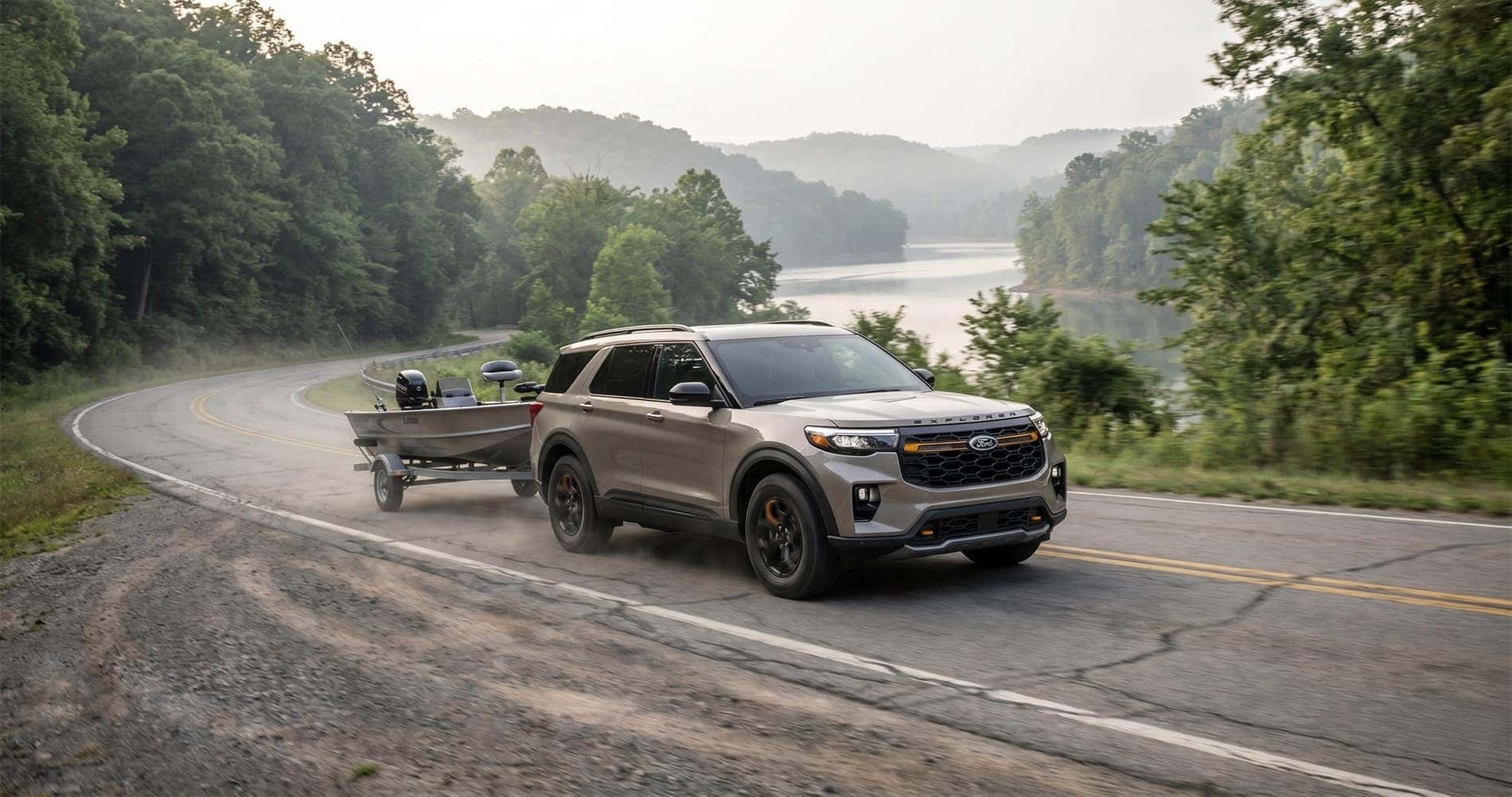
This guide to the 2026 Ford Explorer towing capacity is built to make the numbers easier to understand in real ownership terms. The Explorer continues to stand out as a midsize SUV that balances everyday usability with real capability, offering up to 5,000 lbs of towing across all properly equipped models without forcing you to move up trims just to get there.
That kind of consistency matters in a region where driving rarely stays flat or predictable for long. Roads wind, elevation changes come quickly, and a typical drive can shift from in-town errands to two-lane hills without much warning. The Explorer fits that rhythm well. It stays easy to live with during the week, then handles pulling a trailer out toward Tygart Lake, heading through the grades near Coopers Rock, or loading up for a weekend run without feeling out of place.
In the sections below, we’ll break down the 2026 Ford Explorer towing specs by engine and drivetrain, what the standard towing package actually includes, and the limits that shape how the vehicle behaves under load. The goal is to turn those numbers into something more useful—so instead of just seeing a 5,000-lb rating, you understand how the Explorer handles it, what it supports, and where it makes the most sense depending on how you plan to use it.
The 2026 Explorer earned the IIHS Top Safety Pick+, the highest safety rating awarded by the Insurance Institute for Highway Safety. This recognition reflects top-tier crash protection, advanced driver-assistance technology, and strong performance in updated side-impact testing.
Why it matters:

2026 Ford Explorer
8.5 / 10 Rating
Car & Driver Editors’ Choice
Recognized for its balance of space, performance, and everyday usability
Stands out as a practical midsize SUV that blends daily comfort with real towing capability
| 2026 Ford Explorer Towing Capacity by Engine & Drivetrain | |||
|---|---|---|---|
| Engine | Drivetrain | Max Towing Capacity* (Lbs.) | GCWR* (Lbs.) |
| 2.3L EcoBoost I4 | RWD | 5,000 | 10,000 |
| 2.3L EcoBoost I4 | 4WD | 5,000 | 10,100 |
| 3.0L EcoBoost V6 | RWD | 5,000 | 10,800 |
| 3.0L EcoBoost V6 | 4WD | 5,000 | 10,800 |
The 2026 Ford Explorer keeps towing straightforward in a way that actually helps with real decisions. Every configuration—whether it’s the 2.3L EcoBoost or the 3.0L EcoBoost—delivers a 5,000-lb towing capacity when properly equipped. That consistency means you’re not chasing capability across trims. The question shifts to how often you tow and what else you’re carrying at the same time.
Around Fairmont, Bridgeport, and Clarksburg, that 5,000-lb range covers what most drivers actually pull—small campers, fishing boats, and utility trailers. The difference shows up in how the Explorer handles that load. The 3.0L EcoBoost’s higher GCWR gives it more cushion when the cabin is full and you’re climbing out of Morgantown or dealing with elevation changes.
The 2.3L EcoBoost still handles the job while staying easier to live with day to day. Add 4WD, and the Explorer keeps its footing when roads turn wet, uneven, or unpredictable across north-central West Virginia.
| 2026 Ford Explorer Standard Trailer Tow Package | |
|---|---|
| Equipment | Explorer |
| 7-Wire Harness & 4-/7-Pin Connector | Included |
| Class III Hitch Receiver | Included |
| Tow/Haul Mode | Included |
| Trailer Sway Control | Included |
| Lane Keeping Alert* | Included |
The 2026 Ford Explorer towing package comes standard in a way that removes a lot of the guesswork before you ever hook up a trailer. Everything needed to tow safely and confidently is already built in, so there’s no scrambling to add missing pieces after the fact.
The Class III hitch and 7-wire harness with 4-/7-pin connector mean the Explorer is ready to connect to most common trailers without modification. That matters when plans come together quickly—whether it’s loading up a small camper near Grafton or pulling a utility trailer out of Shinnston without needing extra setup.
Where the package really earns its value is in how it manages the load once you’re moving. Tow/Haul mode adjusts shifting and throttle response to keep the vehicle more controlled under weight, especially on longer grades or rolling terrain. Trailer Sway Control adds another layer of stability, helping keep things settled when crosswinds or uneven roads start to affect the trailer.
Features like Lane Keeping Alert also stay active in the background, adding awareness during longer drives. It’s a setup designed to feel predictable and composed, even when road conditions across north-central West Virginia don’t stay consistent.
| 2026 Ford Explorer Towing Limits & Hitch Receiver Capacity | |
|---|---|
| Specification | Figure |
| Maximum Trailer Frontal Area With Trailer Tow Package* | 40 Sq. Ft. |
| Factory-Installed Hitch Receiver Max Trailer Capacity | 5,000 Lbs. |
| Factory-Installed Hitch Receiver Max Tongue Load* | 500 Lbs. |
| Hitch Receiver Application | Explorer Gas Or Hybrid |
This part of the 2026 Ford Explorer towing specs is where capability meets real limits—the kind that actually shape how a trailer behaves once you’re on the road.
The 5,000-lb max trailer capacity lines up with what the Explorer is built to handle across the board, but the 500-lb tongue weight is just as important. That’s what keeps the trailer balanced and stable at the hitch. Load it correctly, and the Explorer stays composed. Push past that balance point, and you start to feel it, especially on uneven stretches between towns like Mannington and Fairmont.
The 40 sq. ft. maximum trailer frontal area also plays a bigger role than most expect. It’s not just about weight—it’s about wind resistance. Taller, boxier trailers catch more air, which becomes noticeable at highway speeds or when moving through open areas outside Buckhannon where wind can shift quickly.
What stands out is how consistent this setup is. Whether gas or hybrid, the Explorer uses the same hitch foundation and limits. That keeps the towing experience predictable, so once it’s set up correctly, it behaves the same way every time you head out.
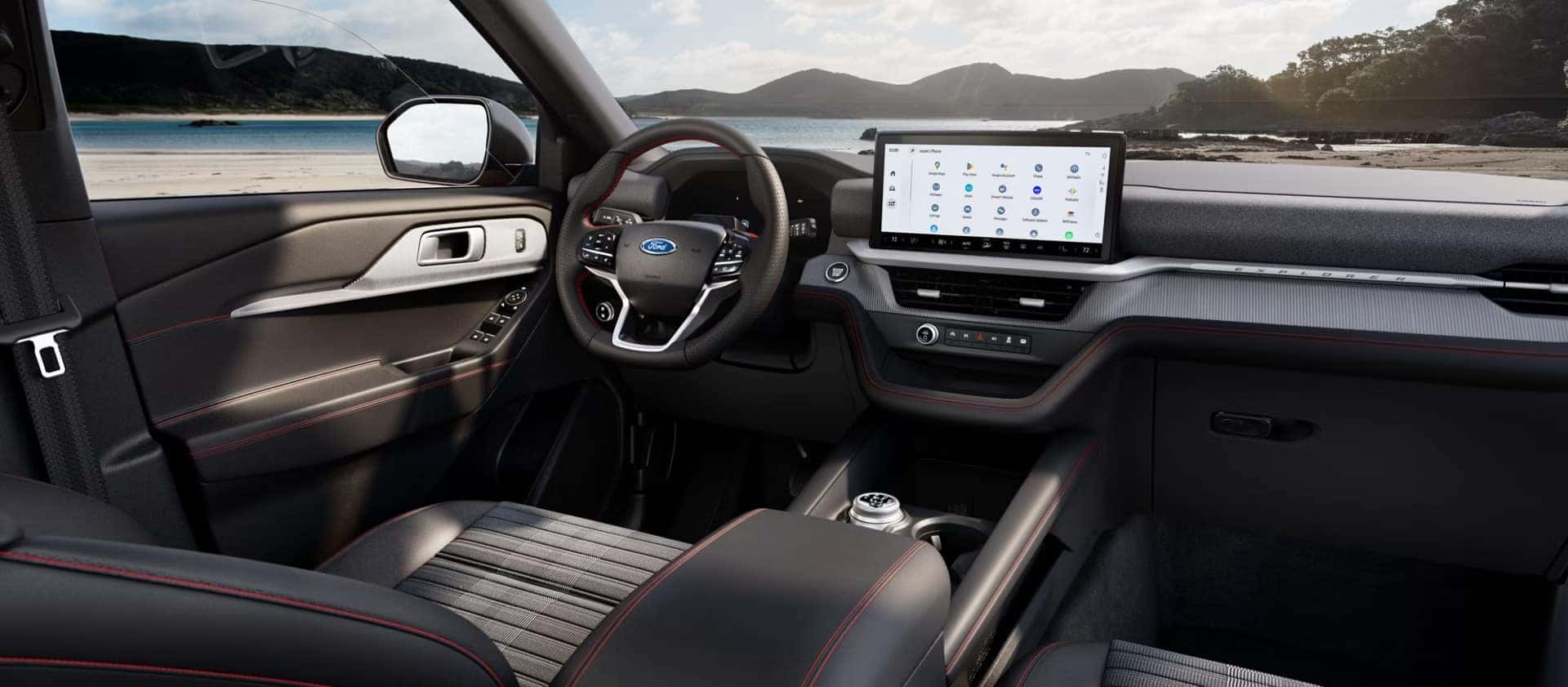
The 2026 Ford Explorer keeps towing simple in a way that actually helps you make a clear decision. Every model is built to handle up to 5,000 lbs when properly equipped, so you’re not trying to chase capability across trims. The focus shifts to how often you tow, what you’re hauling, and how the vehicle needs to feel on the road day to day—if you want to break down how each version is positioned, you can explore the 2026 Ford Explorer models.
☑︎ For occasional towing—small trailers, fishing boats, or weekend gear runs—the 2.3L EcoBoost handles the job without adding more engine than most drivers actually need.
☑︎ When the vehicle is loaded with passengers and cargo, the 3.0L EcoBoost V6 gives you more headroom, which becomes noticeable on longer drives and steady climbs.
☑︎ Tow/Haul mode and Trailer Sway Control are what keep everything feeling controlled, especially when roads stop being flat and predictable.
☑︎ Lower-profile trailers tend to track more smoothly, particularly on open stretches where wind and elevation shifts can affect stability.
☑︎ Staying within the 500-lb tongue weight and keeping the load balanced is what makes towing feel consistent instead of reactive.
What stands out about the Explorer is how naturally it fits the way people actually use an SUV across north-central West Virginia. It handles daily driving through town without feeling oversized, then steps into towing when needed—whether that means pulling out of a gravel lot near Grafton or settling into a longer drive through the hills outside Morgantown.
At Toothman and Sowers Ford, we help drivers from White Hall, Fairmont, Clarksburg, Bridgeport, Morgantown, and the surrounding areas see how the 2026 Ford Explorer towing capacity fits into real routines, not just spec sheets.
We work with drivers across north-central West Virginia every day, and towing comes up more often than most people expect. It’s not just about the number on paper—it’s about how the vehicle handles when you’re pulling out of a gravel lot, climbing through elevation, or settling into a longer drive with a trailer behind you. That’s where we focus the conversation.
At Toothman and Sowers Ford, we take the time to walk through how the 2026 Ford Explorer towing capacity actually fits your routine. Whether you’re coming from Fairmont, Bridgeport, or out toward Grafton, we’ll help you look at the setup as a whole—engine choice, drivetrain, and how you plan to use it—so the vehicle feels right once you’re on the road, not just in the specs.
We’ve helped drivers figure out everything from occasional weekend towing to more consistent hauling needs, and that experience shapes how we guide the process. The goal is simple: match the Explorer to how you actually drive, so it feels predictable, capable, and easy to live with long after you leave the lot.
DISCLAIMERS:
*Towing capacity shown is maximum when properly equipped. Towing capacity will vary based on vehicle configuration, cargo, passenger weight, and accessories.
*Maximum tongue weight and hitch capacity may vary based on equipment and loading. Always ensure proper weight distribution and trailer setup.
*Trailer frontal area and load limits must be followed to maintain safe towing performance. Exceeding these limits may impact stability and control.
*Available features, equipment, and specifications may vary by model, trim level, and drivetrain. See dealer for details.