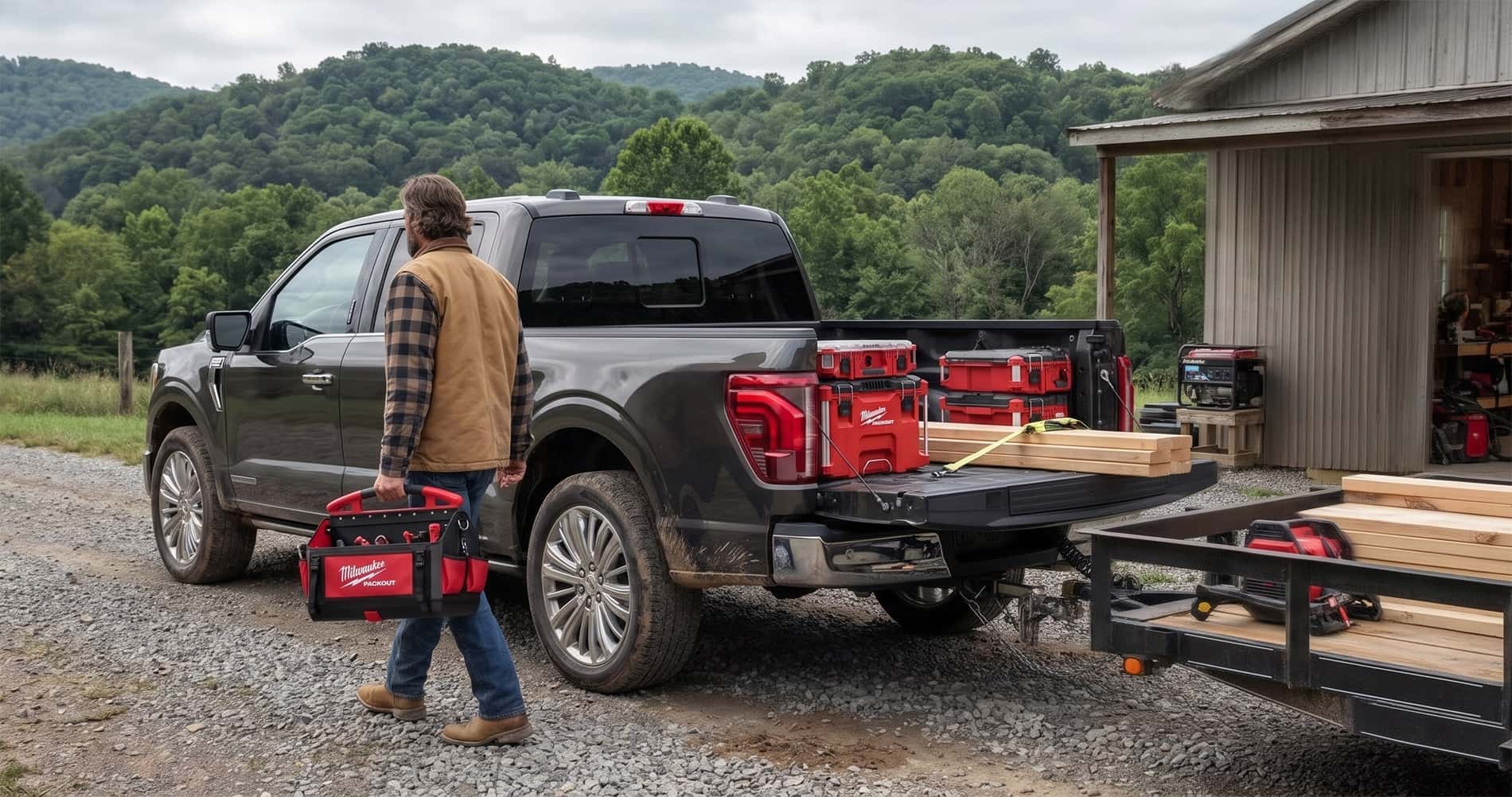
At Toothman & Sowers Ford, we put this guide together around how trucks actually get used across White Hall, Fairmont, Clarksburg, Bridgeport, and Morgantown—not just what the spec sheet says. The 2026 Ford F-150 gives you multiple bed lengths and a wide range of payload capability, but the real decision comes down to how the truck needs to perform once it’s loaded, moving, and part of your routine.
That’s especially relevant across north-central West Virginia, where a truck rarely sticks to one role. It might carry materials during the day, handle equipment on uneven ground, and still need to stay comfortable and manageable for everyday driving. The F-150 lineup is built for that kind of flexibility, but the differences between bed sizes, cab styles, and payload setups matter once the work starts.
In the sections below, we break down 2026 Ford F-150 bed dimensions by box length, along with payload capacity across Regular Cab, SuperCab, and SuperCrew configurations. You’ll see how those numbers translate into real use—how the truck loads, how it carries weight, and which setup makes the most sense depending on how it’s used day to day.

2026 Ford F-150
9 / 10 Rating
Car & Driver Editors’ Choice
Recognized for its broad engine lineup, strong towing and payload capability, and wide range of configurations
Stands out as a full-size truck that adapts to different needs—from daily driving to heavy-duty work—without forcing a single use case
| 2026 Ford F-150 Bed Dimensions by Bed Length * | |||
|---|---|---|---|
| Measurement | 5.5-Ft. Bed | 6.5-Ft. Bed | 8.0-Ft. Bed |
| Inside Length (At Floor) | 67.1 In. | 78.9 In. | 97.6 In. |
| Width Between Wheelhouses | 50.6 In. | ||
| Inside Height | 21.4 In. | ||
| Cargo Box Volume | 52.8 Cu. Ft. | 62.3 Cu. Ft. | 77.4 Cu. Ft. |
The 2026 Ford F-150 bed sizes give you three distinct ways to match the truck to how you actually haul. The 5.5-foot bed keeps things compact and easy to manage, which makes a difference when you’re moving through tighter streets or parking in town. At the same time, it still handles everyday loads—tools, gear, and materials—without feeling limited.
The 6.5-foot bed lands right in the middle and tends to be the most flexible. It adds nearly a full foot of usable length, which changes how things load. Lumber sits more naturally, larger items don’t need as much repositioning, and you spend less time working around the bed.
The 8.0-foot bed shifts the truck into a different category. At over 97 inches of floor length and 77.4 cubic feet of space, it’s built for longer materials, bulk loads, and setups where everything needs to stay inside the bed without relying on the tailgate.
Across all three, the width and height stay consistent, so the decision comes down to length and how often you need it. If you want a closer look at how these measurements compare across the truck, you can explore 2026 Ford F-150 dimensions. We help drivers dial that in based on how the truck gets used day to day—because once you pick the right bed size, everything else about the truck starts to make more sense.
| 2026 Ford F-150 Payload Capacity — Regular Cab | |||
|---|---|---|---|
| Engine | Drivetrain | Bed | Max Payload* |
| 3.5L EcoBoost V6 | 4×2 | 8.0-Ft. | 2,440 Lbs. |
| 3.5L EcoBoost V6 | 4×4 | 8.0-Ft. | 2,175 Lbs. |
| 5.0L Ti-VCT V8 | 4×2 | 8.0-Ft. | 2,135 Lbs. |
| 5.0L Ti-VCT V8 | 4×4 | 8.0-Ft. | 2,080 Lbs. |
| 2.7L EcoBoost V6 | 4×2 | 8.0-Ft. | 1,775 Lbs. |
| 2.7L EcoBoost V6 | 4×4 | 8.0-Ft. | 1,715 Lbs. |
The Regular Cab F-150 is where payload becomes the priority. Every configuration here pairs with the 8-foot bed, which gives you the space and structure to actually use the higher weight limits without compromise. This setup is built for carrying, not balancing around space constraints.
The 3.5L EcoBoost stands out immediately, pushing payload up to 2,440 lbs in 4×2 form. That’s where the truck starts to feel more like a dedicated work tool—handling heavier materials, equipment, or bulk loads without hesitation. The 5.0L V8 stays close behind, offering strong, consistent capacity with a slightly more traditional power delivery.
The 2.7L EcoBoost still carries a solid load, but it sits in a different lane. It works well for lighter, repeat-use hauling where efficiency and simplicity matter more than pushing maximum weight.
Going from 4×2 to 4×4 trims payload slightly, but adds capability when the surface changes. Around here, that tradeoff matters depending on where the truck ends up.
This is the most straightforward version of the F-150. Maximum bed, maximum payload, and a setup that’s built to carry weight consistently without overthinking it.
| 2026 Ford F-150 Payload Capacity — SuperCab | |||
|---|---|---|---|
| Engine | Drivetrain | Bed | Max Payload* |
| 5.0L Ti-VCT V8 | 4×2 | 6.5-Ft. | 2,155 Lbs. |
| 5.0L Ti-VCT V8 | 4×4 | 6.5-Ft. | 2,055 Lbs. |
| 3.5L EcoBoost V6 | 4×2 | 6.5-Ft. | 2,060 Lbs. |
| 3.5L EcoBoost V6 | 4×4 | 6.5-Ft. | 1,965 Lbs. |
| 2.7L EcoBoost V6 | 4×2 | 6.5-Ft. | 1,670 Lbs. |
| 2.7L EcoBoost V6 | 4×4 | 6.5-Ft. | 1,585 Lbs. |
The SuperCab F-150 shifts the focus toward balance. You still get strong payload numbers—over 2,100 lbs with the 5.0L V8—but now paired with a 6.5-foot bed and a cab that adds usable interior space without going full crew size. This setup tends to fit drivers who need the truck to do more than just carry weight.
The 5.0L V8 leads here, delivering the highest payload while keeping the truck stable under load. It’s a consistent choice for heavier materials or equipment that need both space and support. The 3.5L EcoBoost stays close, offering nearly the same capacity with a different feel when the truck is moving, especially under changing load conditions.
The 2.7L EcoBoost sits lower in payload, but still handles everyday hauling comfortably. It works well when the truck carries gear, tools, or lighter materials on a regular basis without pushing toward maximum capacity.
Moving to 4×4 trims payload slightly, but adds confidence when conditions change—something that shows up quickly once the truck leaves pavement or deals with uneven surfaces.
The SuperCab lands in a practical middle ground. It carries real weight, gives you usable bed length, and adds just enough cabin space to make the truck more flexible day to day.
| 2026 Ford F-150 Payload Capacity — SuperCrew | |||
|---|---|---|---|
| Engine | Drivetrain | Bed | Max Payload* |
| 3.5L EcoBoost V6 | 4×2 | 5.5-Ft. | 2,160 Lbs. |
| 3.5L EcoBoost V6 | 4×4 | 5.5-Ft. | 1,905 Lbs. |
| 5.0L Ti-VCT V8 | 4×2 | 5.5-Ft. | 2,235 Lbs. |
| 5.0L Ti-VCT V8 | 4×4 | 5.5-Ft. | 1,980 Lbs. |
| 3.5L PowerBoost Hybrid V6 | 4×2 | 5.5-Ft. | 2,010 Lbs. |
| 3.5L PowerBoost Hybrid V6 | 4×4 | 5.5-Ft. | 1,740 Lbs. |
| 2.7L EcoBoost V6 | 4×2 | 5.5-Ft. | 1,685 Lbs. |
| 2.7L EcoBoost V6 | 4×4 | 5.5-Ft. | 1,640 Lbs. |
| High-Output 3.5L EcoBoost V6 (Raptor) | 4×4 | 5.5-Ft. | 1,410 Lbs. |
The SuperCrew F-150 brings everything together—passenger space, everyday comfort, and still strong payload capability. Even with the shorter 5.5-foot bed, payload numbers stay over 2,000 lbs in the right configurations, which is where this setup starts to stand out. It handles real weight while keeping the truck usable for daily driving and carrying people at the same time.
The 5.0L V8 leads the group at 2,235 lbs in 4×2 form, giving you the highest payload without giving up the full cabin. The 3.5L EcoBoost follows closely, staying above 2,100 lbs while offering a different feel under load, especially when the truck is moving through changing conditions. The PowerBoost Hybrid adds another layer—still strong payload, but with a focus on efficiency and smoother power delivery.
The 2.7L EcoBoost sits slightly lower, but still carries more than enough for everyday use—tools, gear, and materials that don’t push toward maximum capacity. The Raptor moves in a different direction entirely, prioritizing suspension and performance over payload, which shows in the lower number.
Going to 4×4 trims payload across the board, but adds capability when surfaces change or conditions aren’t ideal.
The SuperCrew works because it doesn’t force a tradeoff. It gives you space for passengers, usable bed capacity, and a setup that fits both daily driving and hauling without needing to choose one over the other.
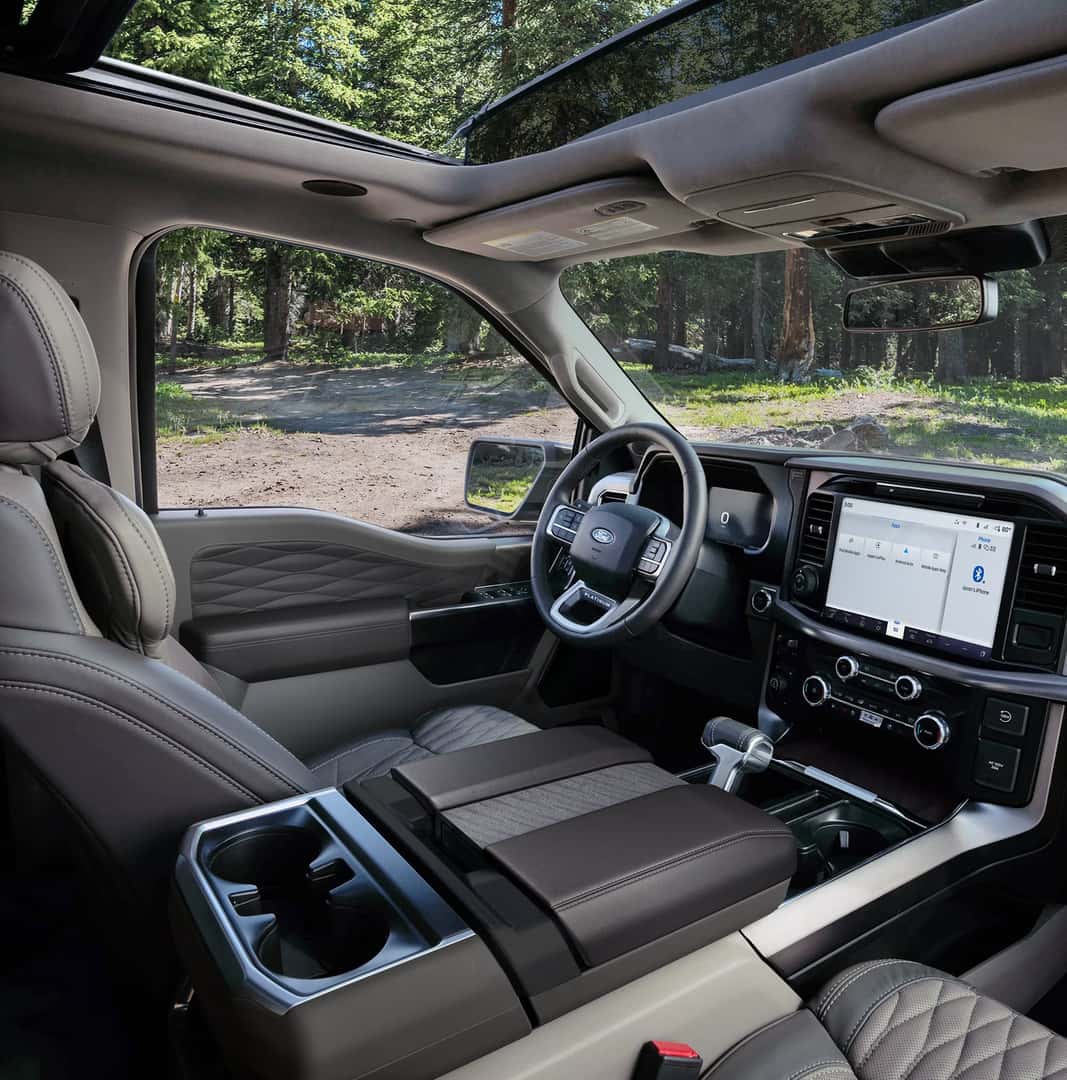
At Toothman & Sowers Ford, the 2026 Ford F-150 comes down to how the truck is actually going to be used once it leaves the lot. Bed size and payload aren’t just specs—they shape how the truck works every day. The 5.5-foot bed keeps things easier to manage and fits daily driving without feeling oversized, while the 6.5-foot bed adds flexibility for longer materials and more varied loads. The 8.0-foot bed moves into a different category entirely, built for carrying length and weight without compromise.
Payload follows the same pattern. Some configurations push well past 2,000 lbs, which changes what the truck can handle without hesitation. Others shift toward ride quality, passenger space, or off-road performance, and you feel that difference once the bed starts to fill. If you want to see how payload connects to towing and overall capability, you can explore 2026 Ford F-150 towing capacity and payload in more detail.
We work with drivers across this region who rely on their truck to do more than one job. The F-150 fits that because it doesn’t lock you into one type of use. It can carry weight, handle longer materials, and still stay comfortable and usable day to day. If you’re comparing how each version is set up, you can also break down the 2026 Ford F-150 trim levels to see how those differences come together.
Our role is to help you match the F-150 to how you actually load it, drive it, and rely on it. Once that lines up, the truck becomes easier to use—and more capable—every time you put it to work.
Toothman & Sowers Ford is proud to serve drivers from White Hall, Fairmont, Clarksburg, Bridgeport, Morgantown, Grafton, Shinnston, Mannington, and Buckhannon, along with the greater north-central West Virginia region. We work with drivers every day who rely on their truck to handle real demands—hauling, towing, loading, and everything in between.
That’s where our approach stands out. We don’t just walk through specs—we focus on how the F-150 actually performs once it’s loaded, moving, and part of your routine. Bed size, payload, and configuration all play a role in how the truck feels and works, and we help you sort through those differences in a way that makes sense. If you want to learn more about how we work with drivers across the region, you can learn more about Toothman & Sowers Ford.
Our goal is to help you choose an F-150 that fits how you actually use a truck—whether that’s daily hauling, heavier work, or a mix of both. When everything lines up, the truck feels right every time you use it. You can also explore current Ford F-150 inventory here to see how these trucks are equipped right now.
DISCLAIMERS:
*Payload capacity shown is maximum when properly equipped. Payload includes passengers, cargo, and any added equipment. Actual capacity will vary based on vehicle configuration.
*Cargo and load capacity are limited by weight and distribution. Exceeding rated capacity may affect vehicle performance and safety.
*Bed dimensions, cargo volume, and measurements are based on manufacturer specifications and may vary slightly depending on configuration and equipment.
*Maximum payload ratings may require specific equipment packages. See dealer for details on availability and configuration requirements.
*Available features, engines, drivetrain options, and specifications may vary by model, trim level, and options. See dealer for complete details.