

Why Is My Ford Heater Blowing Cold Air?
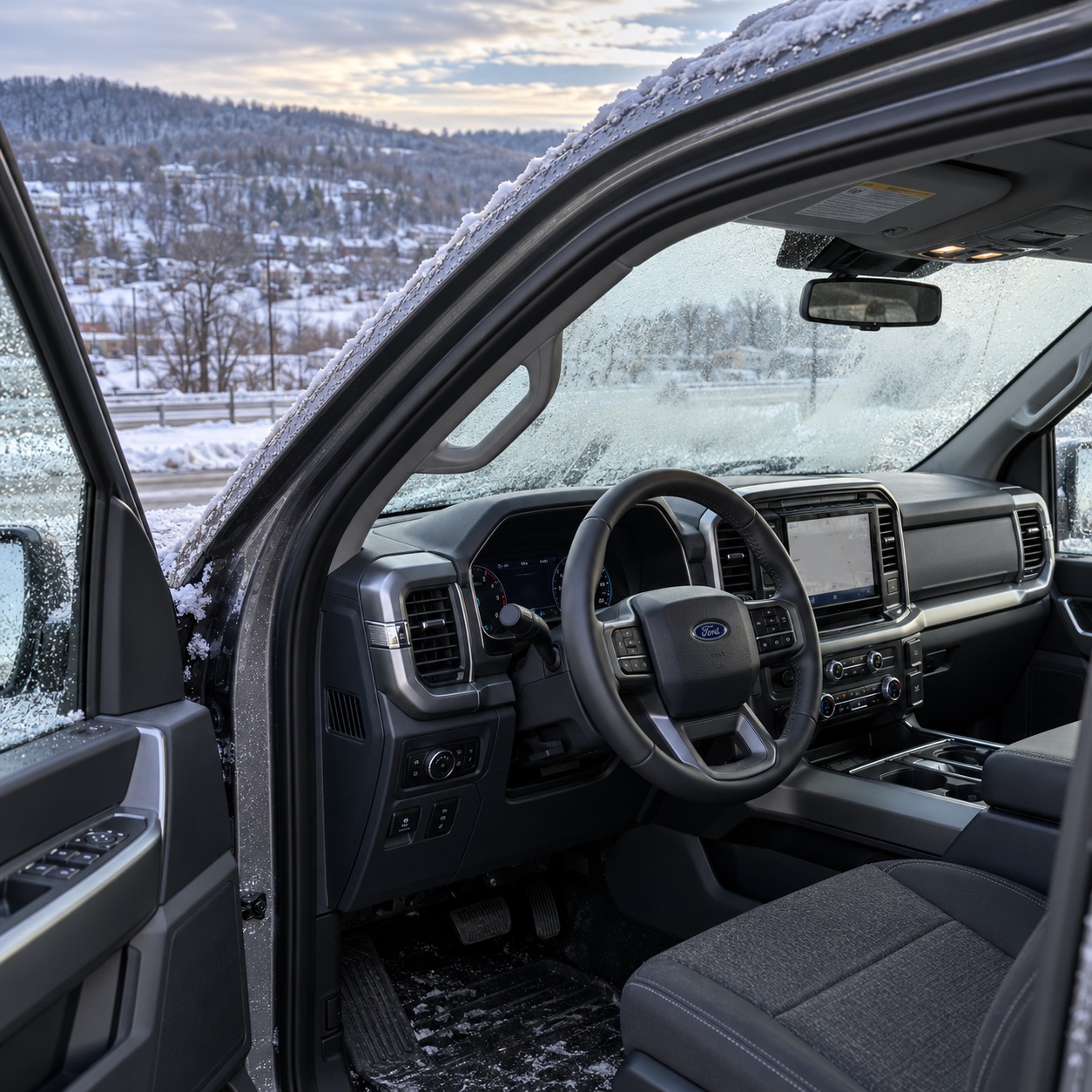
T&S Ford Winter Service
Cold Air After Warm-Up Means It Is Time to Separate a Heating Problem From an Airflow Problem
Brief cool airflow after a cold start is normal on a coolant-heated Ford while the engine warms. Once the vehicle reaches normal operating temperature, vents that still blow cold air need diagnosis. On coolant-heated models, we start by checking coolant level and circulation, trapped air after cooling-system work, thermostat operation, heater-core flow, and blend-door or actuator control. When airflow is weak instead of cold, we inspect the blower, cabin air filter, the air path through the vents, and climate-control operation. Hybrid and electric Fords use different heating strategies, so we identify the exact vehicle and powertrain before choosing the diagnostic path.
If you drive around White Hall, Fairmont, or the I-79 corridor, use this guide to separate a routine warm-up delay from a heater, airflow, defrost, or cooling-system concern.
Start Here
Match the symptom before you guess the repair
Airflow Is Strong but Cold?
Strong airflow tells us the blower is moving air. We then focus on how your Ford is producing, transferring, and directing heat.
Airflow Is Weak or Missing?
When airflow is weak or missing, we follow a different path. Tell us which vents work, which fan speeds respond, and whether airflow changes when you switch modes.
Overheating or Losing Defrost?
Do not treat that as a comfort-only issue. Pull over safely when required by a temperature warning, steam, a significant coolant leak, or poor windshield visibility.
How Your Ford Turns Heat Into Warm Cabin Air
On many gasoline and diesel Fords, engine coolant carries heat to a heater core inside the HVAC system. Air moves across that core before the climate-control system directs the requested temperature into the cabin. Ford thermostats maintain the coolant temperature required for normal engine and heater performance.
When you bring us a Ford with strong airflow at the wrong temperature or rhythmic clicking behind the dashboard, we inspect blend-door and actuator operation along with the rest of the temperature-control system. Hybrid and battery-electric Fords use different heating strategies, so we identify the exact vehicle and powertrain before applying conventional coolant-heater logic.
Why a Ford Heater Can Keep Blowing Cold Air
Once a coolant-heated Ford is fully warm and the vents still blow cold, we separate the diagnosis into three paths: the system is not reaching or holding the heat it needs, that heat is not moving through the heater core correctly, or the HVAC system is not directing the temperature you selected.
The Cooling System Is Not Supplying Enough Heat
We check coolant level, trapped air in the cooling circuit after service, coolant circulation, and thermostat operation because each affects the heat available to the cabin. If the engine is overheating or coolant is visibly leaking, we treat the cooling-system concern first rather than the cabin-comfort symptom.
Heat Is Not Moving Through the Heater Core Normally
We verify that hot coolant is reaching the heater core and that the core is transferring heat into the air stream. Restricted flow or a heater-core leak reduces cabin heat. Passenger-side floor dampness or recurring coolant loss gives us useful evidence to follow.
The HVAC System Is Not Directing the Requested Temperature
When the selected temperature does not match vent output, one side stays cold, or rhythmic clicking starts behind the dash, we inspect blend doors, actuators, and related temperature controls. Those symptoms keep the focus on HVAC control instead of assuming the entire heating system has failed.
Special Case
Ford Heater Blowing Cold Air After a Coolant Flush or Repair
If the heater worked normally before cooling-system service and turned cold or intermittent immediately afterward, that timing moves recent service history to the front of our inspection. On a coolant-heated Ford, we check for trapped air, an incomplete coolant fill, a continuing leak, and other circulation problems that interrupt normal flow through the heater core.
Tell us what cooling-system work was performed, when the heater behavior changed, whether the engine temperature remains normal, and whether heat returns while driving or at higher engine speed. That history gives the diagnosis a more useful starting point than assuming the heater core or thermostat automatically needs replacement.
Cold Air and Weak Airflow Are Two Different Complaints
Before you schedule, notice what the system is actually doing. You do not need to name the failed part. A precise symptom description gives our service team a much stronger starting point than simply writing “heater does not work.”
| What You Notice | What to Tell Our Service Team |
|---|---|
| Strong airflow that stays cold | We want to know whether the engine is fully warmed, what temperature is selected, whether the symptom changes while driving, and whether both sides of the cabin behave the same way. |
| Weak airflow at every temperature | Tell us which fan speeds work, which vents produce air, and whether changing from panel to floor or defrost changes the airflow. When airflow is weak, we inspect the blower, cabin air filter, air intake, ducting, and mode controls. |
| One side is warm and the other is cold | Note the driver/passenger settings and whether changing each zone produces a response. That pattern directs us toward zone-specific blend-door and actuator operation rather than the entire heating system. |
| Heat improves only while driving or at higher engine speed | Tell us whether the cabin cools back down at idle and whether the engine temperature display changes. We evaluate coolant level, trapped air, heater-core flow, and circulation while checking engine-temperature behavior. The pattern narrows the path without proving one failed part. |
| Clicking behind the dash | Tell us when the clicking starts and whether it follows a temperature or vent-mode change. Rhythmic clicking that follows those changes sends our inspection toward blend-door actuator operation. |
| Coolant warning, overheating, steam, or visible leak | Treat the cooling-system warning first. Stop safely when required and do not remove a coolant reservoir cap while the engine or cooling system is hot. |
What to Do Before You Drive Farther
Use the heater problem to gather useful information, not to perform a roadside repair. These steps keep the focus on the symptom and the safety conditions around it.
1. Give a Coolant-Heated System Time to Warm
After a true cold start, note whether the engine reaches its normal operating range and whether cabin heat begins as that happens. Do not use this step as a reason to ignore a temperature warning.
2. Separate Airflow From Temperature
Check whether the fan moves a normal amount of air and whether the problem is temperature, airflow volume, vent routing, or a combination of those symptoms.
3. Check the Instrument Cluster for Warnings
A heater complaint paired with an engine-temperature or coolant warning changes the priority. Follow the vehicle warning guidance and stop safely when the vehicle indicates an overheating condition.
4. Give Us the Timeline
Tell us when the problem started, whether cooling-system work happened beforehand, how long the cold air lasts, and whether warnings, leaks, dampness, clicking, or changes at idle appeared at the same time.
Ford F-150 Heater Blowing Cold Air: What Matters Most
When you bring us an F-150 with cold-air heater symptoms, we start with the exact truck because model year, engine, climate-control layout, and operating conditions change the diagnostic path. We do not assign one repair to every F-150 that shares the symptom.
Start With the Exact Truck
Give us the F-150 model year, engine, mileage, and climate-control configuration. That keeps the diagnostic path tied to the hardware actually installed on your truck.
Watch Engine Temperature and Heater Behavior Together
Tell us whether the engine reaches its normal temperature range, whether heat improves after driving, and whether it cools again at idle. Those details are more useful than assuming the truck automatically needs a heater core or thermostat.
Report Zone or Dashboard-Control Symptoms
If one side stays cold, the selected temperature does not change the vent output, or clicking begins behind the dash, include that information. It points the inspection toward temperature-control hardware and operation.
Gas, Diesel, Hybrid and Electric Ford Heating Systems Are Not Identical
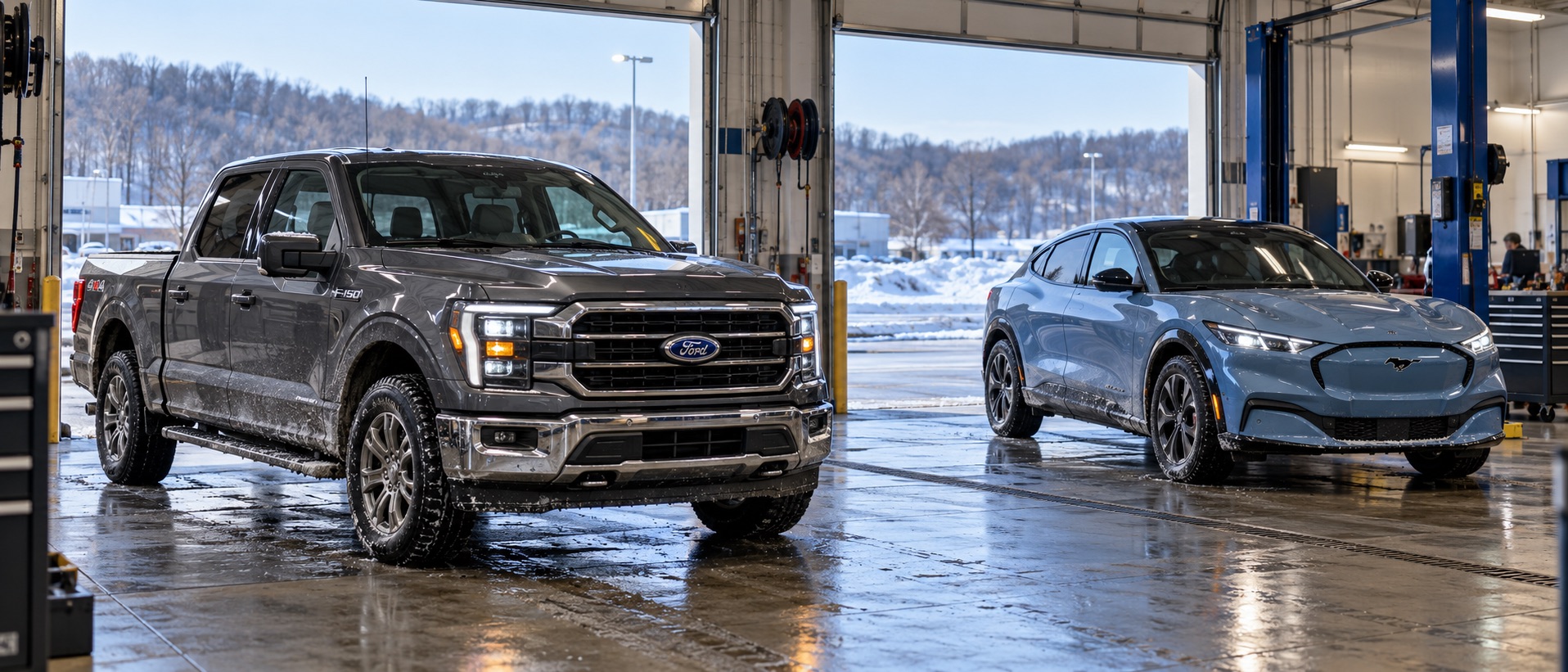
We identify how your specific Ford creates cabin heat before we choose the diagnostic path. A repair that fits one F-150, Escape, Explorer, or Mustang Mach-E does not automatically fit another powertrain.
| Ford Powertrain Type | Why the Heating Diagnosis Changes |
|---|---|
| Gasoline | On many conventional gasoline Fords, engine coolant supplies heat to the heater core. We evaluate coolant temperature and flow, heater-core operation, and HVAC temperature control together. |
| Diesel | Diesel applications have their own cooling-system hardware and warm-up behavior depending on the model and equipment. We diagnose the exact truck configuration rather than assuming a gasoline-engine repair path applies unchanged. |
| Hybrid / Plug-In Hybrid | Hybrid and plug-in hybrid Fords use model-specific heating strategies tied to vehicle mode and powertrain operation. We verify the exact system before applying conventional engine-heater assumptions. |
| Battery Electric | Battery-electric models do not depend on engine heat the way a conventional gasoline vehicle does. We account for electric climate-control hardware and, on equipped newer Ford EVs, heat-pump operation when we diagnose the system. |
When Cold Air From the Heater Becomes a Safety Problem
A cold cabin is uncomfortable; a heater problem paired with cooling-system warnings or loss of windshield visibility is a safety concern. Follow the vehicle warning messages and your visibility conditions to decide whether to stop safely or schedule service.
Urgent
Stop Safely and Arrange Assistance
- The engine-temperature warning indicates overheating
- You see steam or a significant coolant leak
- The vehicle instructs you to stop because of a cooling-system condition
- You cannot maintain safe windshield visibility in winter conditions
- Another warning or drivability problem makes continued travel unsafe
Book Service
Schedule Diagnosis Soon
- The heater stays cold after normal warm-up
- Heat repeatedly disappears or changes with vehicle speed
- One side of the cabin stays cold while the other side warms
- You hear repeated clicking when temperature settings change
- You notice passenger-side floor dampness or recurring coolant loss
Ford Heater Diagnosis for White Hall, Fairmont, and I-79 Winter Driving
Around White Hall, Fairmont, and the I-79 corridor, we treat winter heater complaints as more than a comfort issue because cabin heat also supports windshield defrost and visibility through freezing temperatures, snow, slush, and overnight ice.
When you schedule, include whether the problem started suddenly or gradually, whether the Ford warms normally, whether airflow is strong, whether the temperature changes between idle and driving, and whether any warning, leak, dampness, or clicking appeared at the same time. That information gives our technicians a clear starting point before the vehicle enters the bay.
Cold Air After Warm-Up? Bring Us the Symptom.
At T&S Ford, our factory-trained technicians diagnose Ford heater, airflow, defrost, and climate-control concerns with Ford and Motorcraft parts support when a repair requires replacement components. Schedule your vehicle and give us the symptom timeline before the visit.
Frequently Asked Questions
Ford Heater Blowing Cold Air Questions
We answer the heater questions we hear most often about normal warm-up, low coolant, trapped air after cooling-system work, thermostats, heater cores, F-150 symptoms, one-side heat, weak airflow, defrost safety, and scheduling service with us.
Why Service With Us
Why Bring Your Ford Heater Concern to T&S Ford
Factory-Trained Technicians
Our service team works with Ford vehicles and uses the vehicle, powertrain, warnings, and symptoms to guide diagnosis instead of applying one repair to every no-heat complaint.
OEM Ford Parts Support
When diagnosis leads to a repair that requires replacement parts, our service department supports the job with genuine Ford and Motorcraft components.
Convenient Online Scheduling
Start your service request online and give us the heater behavior, airflow changes, warning messages, and other details before you arrive.
90+ Years of Dealership History
More than 90 years of dealership history backs a practical service approach built around White Hall, Fairmont, and north-central West Virginia driving.
Keep Exploring
Schedule a heater diagnosis, review current service offers, or explore the parts and service resources available from T&S Ford.
DISCLAIMERS:
*This page provides general information about Ford heating and HVAC symptoms. A cold-air or weak-airflow symptom does not establish a diagnosis. Heating-system design and repair procedures vary by model year, engine, drivetrain, hybrid or electric powertrain, equipment, and climate-control configuration. Follow the warnings and instructions in the owner’s manual for your specific vehicle.
*Do not remove a coolant reservoir or pressure cap while the engine is running or the cooling system is hot. If the vehicle displays an overheating warning, has a significant coolant leak, produces steam, or cannot maintain safe windshield visibility, stop safely and follow the vehicle’s warning guidance or arrange professional assistance.
*Appointment availability, service recommendations, pricing, offers, parts availability, and repair timing vary by vehicle and current dealership conditions. Review current offer terms and confirm appointment details with T&S Ford before your visit.